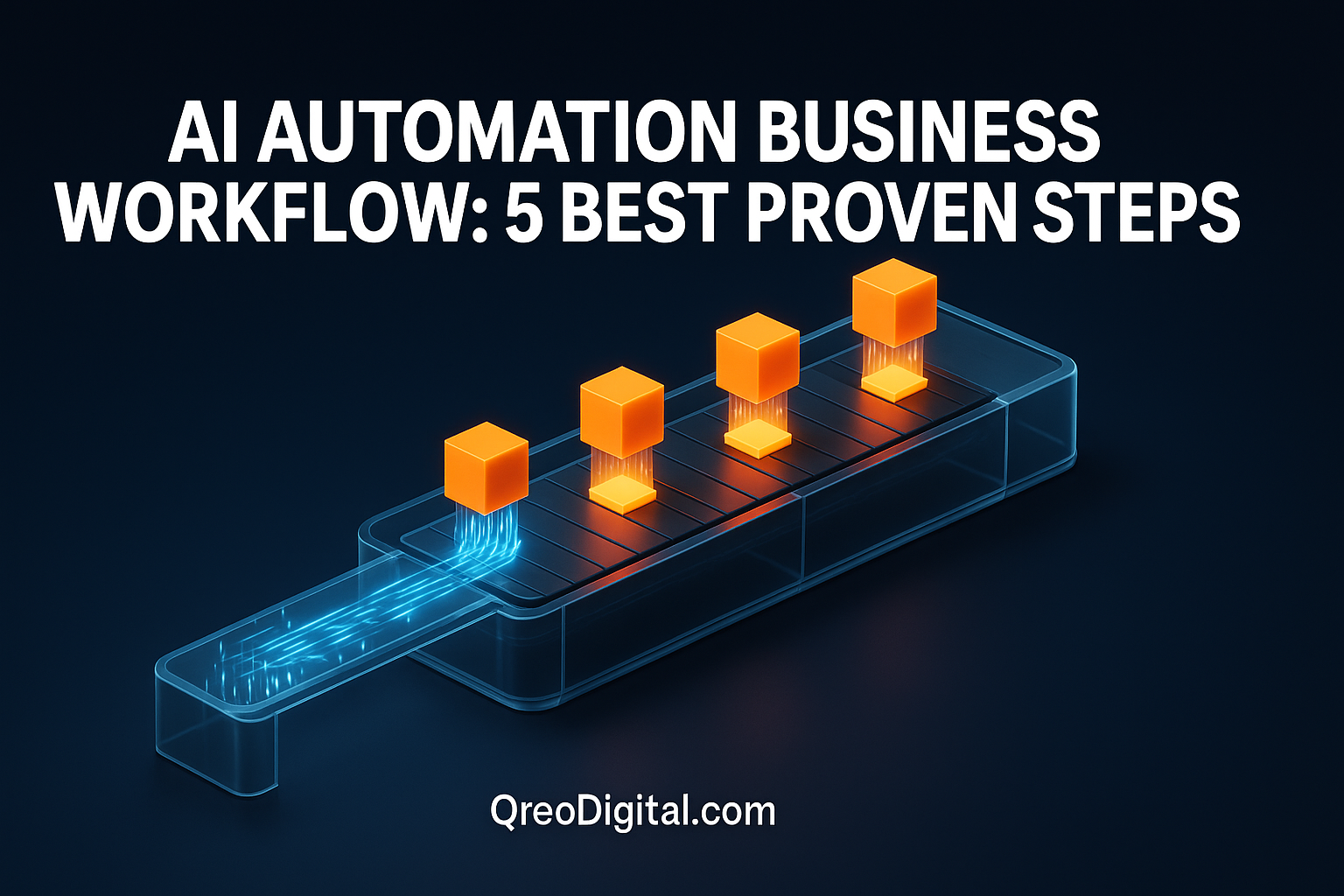
Implementing a robust AI automation business workflow is no longer optional for forward-thinking enterprises in 2026. As intelligent systems evolve, organizations must adapt to remain competitive and scale operations efficiently.
Integrating these technologies can be complex, requiring a structured approach to guarantee sustainable long-term success. If you are ready to modernize your systems, explore our digital marketing services to discover how we can elevate your overall brand presence alongside backend improvements.

The State of AI Automation in 2026
By 2026, the landscape of business technology has shifted dramatically toward autonomous operations. Modern organizations are utilizing custom advanced OpenAI models to drive efficiency across every internal department.
According to Gartner’s latest research, enterprise adoption of intelligent systems has reached unprecedented levels. Achieving seamless business process automation is now the primary objective for modern chief technology officers worldwide.
Identifying Bottlenecks in Your AI Automation Business Workflow
Before deploying new systems, you must conduct a thorough audit of your existing manual processes. Pinpointing operational friction highlights where intelligent agents will provide the highest immediate investment return.
Look for repetitive, high-volume tasks that consume valuable employee hours daily. Resolving these bottlenecks via a clear AI implementation strategy ensures immediate cost savings and improved team morale.
Choosing the Right Generative AI Tools
Selecting appropriate generative AI tools requires careful analysis of your infrastructure requirements. Different tools excel at unique business functions, from complex code generation to creative asset production.
Our team at Qreo Digital specializes in tailoring bespoke tech stacks for businesses. Learn more about how we build custom systems by reviewing our specialized AI automation services today.

Step-by-Step AI Automation Business Workflow Framework
A structured framework is necessary to guide your organization through this digital transformation safely. Without clear guidelines, systems can become fragmented, creating isolated silos of unstructured data.
Designing Your AI Automation Business Workflow Architecture
First, map your data paths clearly to ensure seamless integration between modern APIs and legacy software. Establish strict governance policies early to protect proprietary corporate information from external leaks.
Developing a Flexible AI Integration Roadmap
Next, construct a detailed AI integration roadmap highlighting phase-by-phase milestones. Starting with small proof-of-concept projects reduces early risks and proves immediate value to stakeholders.
Overcoming Common Automation Challenges
Many organizations face significant resistance when introducing automated workflows to their teams. Employee fear of displacement can stall integration efforts and lower overall productivity levels during transition.
Open communication and targeted training programs are essential to ease these common structural anxieties. Emphasize how automation enhances roles rather than replacing valuable human input.
Scaling AI Adoption Across Your Organization
Once initial pilots prove successful, scale those methodologies across other corporate divisions. Establishing an internal center of excellence helps maintain consistency across all scaling efforts.
Ready to unlock the complete potential of machine learning within your company? Contact Qreo Digital today to build a future-proof roadmap designed specifically for your corporate objectives.
Frequently Asked Questions
What is an AI automation business workflow?
It is a structured sequence of tasks where artificial intelligence systems automate decision-making and operational processes.
How do generative AI tools help businesses?
They automate content creation, data analysis, customer support, and software development, increasing efficiency.
Why is a business process automation strategy important?
It reduces operational costs, eliminates human error, and allows staff to focus on strategic tasks.
What is an AI integration roadmap?
A step-by-step strategic plan outlining how an organization plans to adopt and scale AI technologies.
How can we develop an AI implementation strategy?
Start by identifying operational bottlenecks, choosing the right tools, and scaling via structured pilots.
Are generative AI tools secure for enterprise data?
Yes, when deployed using private cloud infrastructure and enterprise-grade API governance models.
What is the primary barrier to AI adoption?
Employee resistance and the lack of proper training are the most common organizational hurdles.
How does Qreo Digital support AI automation?
Qreo Digital provides end-to-end consulting, custom tool integration, and full-scale deployment support.
Can legacy systems support AI integration?
Yes, modern APIs can bridge the gap between legacy databases and advanced generative AI engines.
What are the benefits of scaling AI across departments?
It unifies data structures, reduces software silos, and accelerates cross-functional project delivery.